Babe, The Phoenix Fairy, and The Magic Grove, by Mandy Greer, Seattle Central Library
-
Babe, The Phoenix Fairy, and The Magic Grove, by Mandy Greer, Seattle Central Library
We’ll explore three works in this space by Mandy Greer (b. 1973), a multimedia Seattle-based artist who works in pottery, fiber, photography, and performance. Like Yamamoto, she was an awardee of the Library Unbound project in 2003 and, following an artist’s residency, she created three works for the Faye G. Allen Children’s Center. For her proposal, Greer focused on “the individual child patron who walks through the door with a seed—an itch of an idea—and the process that happens as they bounce back and forth through centuries, places, worlds far, near and non-existent to find what they did not even know they were looking for.” Greer chose the Children’s Center to create her works as children’s areas are often the first place a child interacts with the library. It becomes a child’s “place for personal exploration.” Greer was inspired by texts she found in books from the Folklore section. The three pieces she created each serve as a metaphor for different types of research: yet-to-be discovered history, the continual rebirth of knowledge, and seeds, planted as ideas, that ultimately take root and grow.
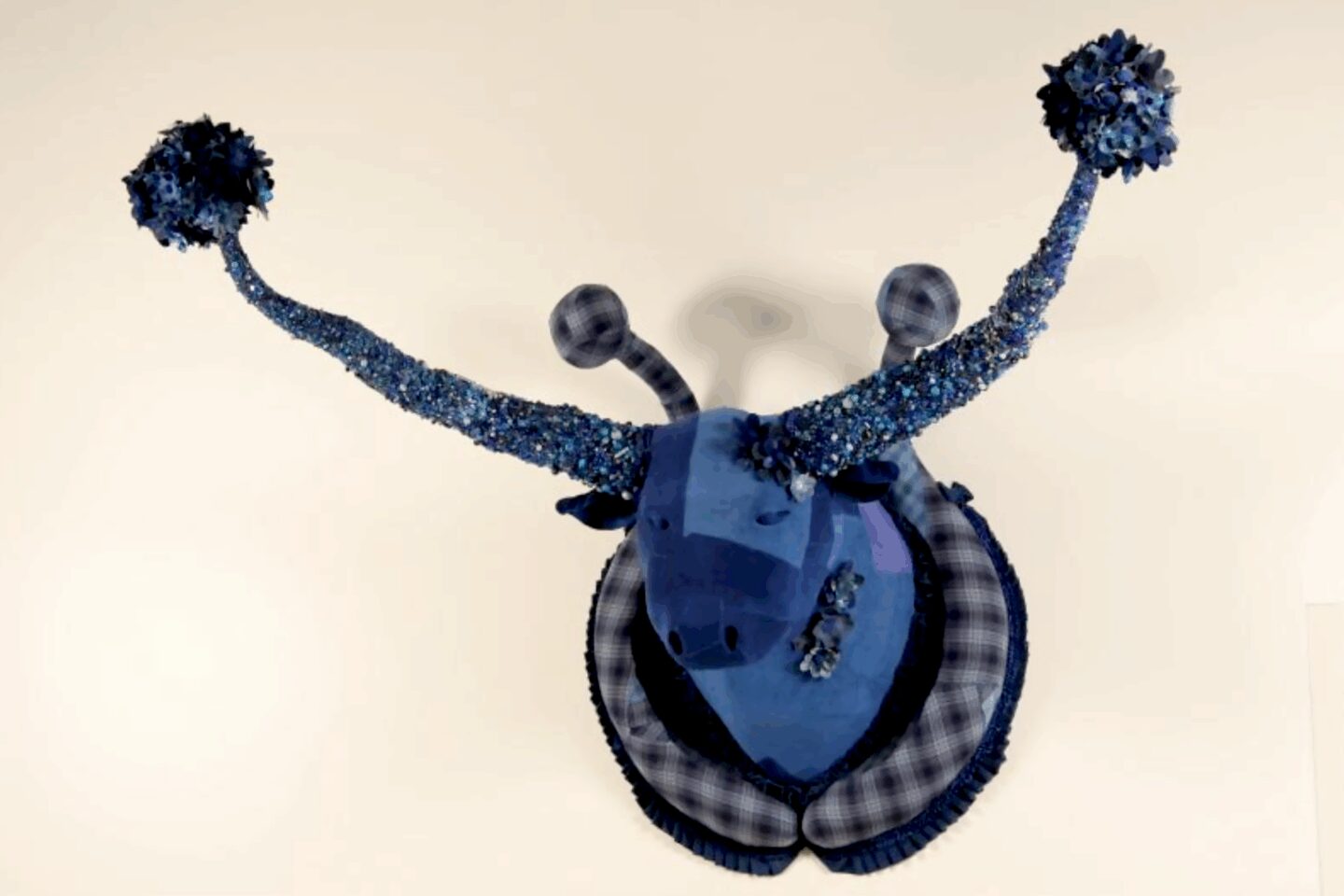
Babe, The Blue Ox (2004-2005)
The first of these three works is mounted on the wall. Babe, the blue ox, was the companion and work animal of Paul Bunyan, the lumberjack hero born out of North American folktales. This mixed media piece, in the style of a taxidermized shoulder mount, is made from wood, steel, foam, paper mâché, fabric, beads, glitter, and acrylic paint. For Greer, Babe represents history that sits just below the surface, one that is waiting to be discovered if we just investigate the world around us.
While doing research for the project, Greer discovered a connection between the 19th and early 20th century logging industry of the U.S., the creation and recording of the Paul Bunyan folklore, and the Pacific Northwest. Oral traditions were carried by loggers migrating across the country westward, many ending up in the area now known as Washington state, a land thick with forests. Stories like that of Paul Bunyan and Babe were shared by workers for entertainment and a respite from the vigorous and dangerous work of logging. The characters were seen as heroes that embodied hard work and demonstrated extraordinary strength. As stories were passed along, they picked up local characteristics and vernacular. Folkloric stories are often a way children first learn about history. The Children’s Center offers these kinds of stories and more. Greer imagines that a child might get “a clear view right through Babe’s eyes” to understand the way things were when early logging was dominant.
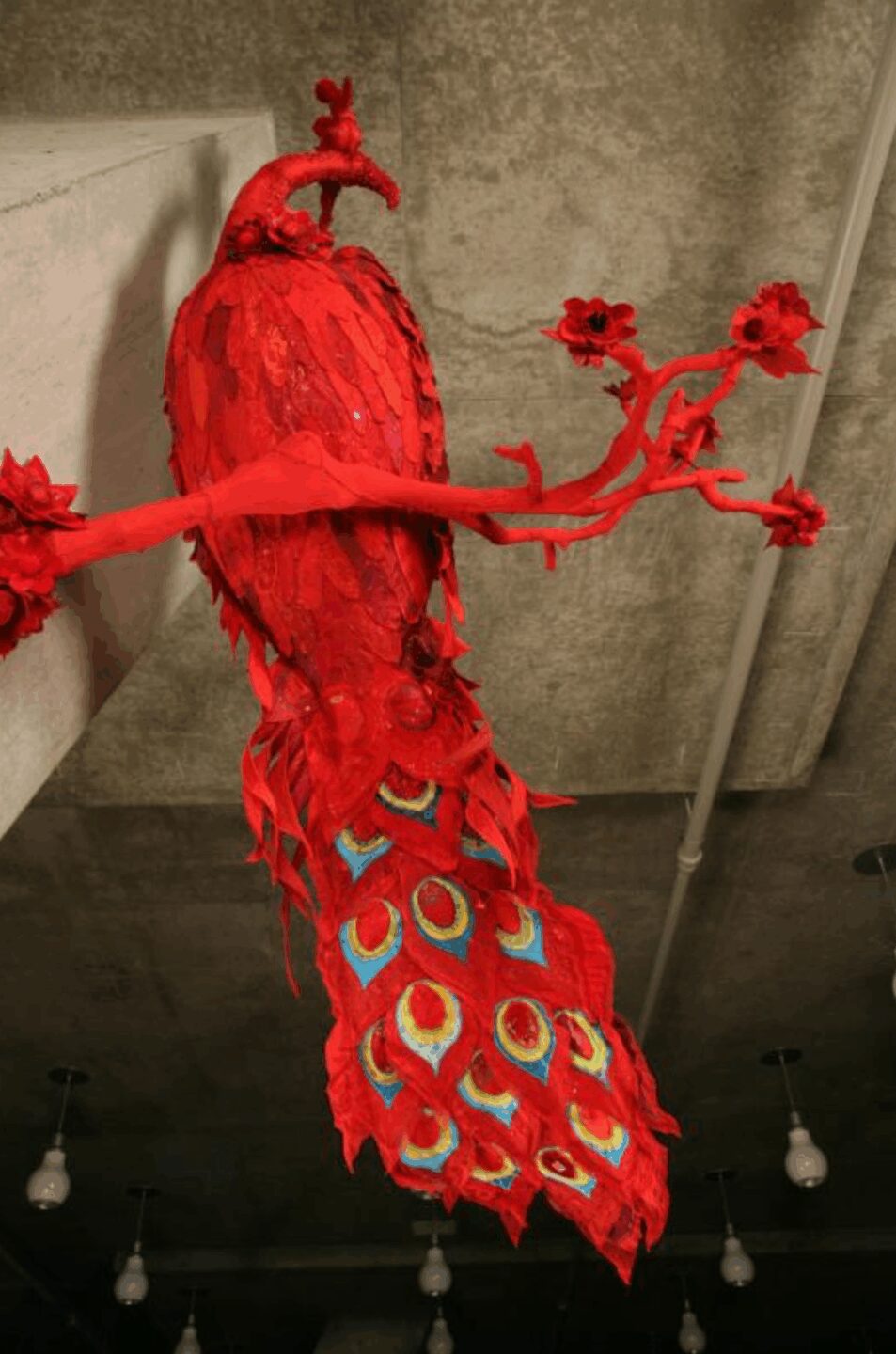
The Phoenix Fairy (2004-2005)
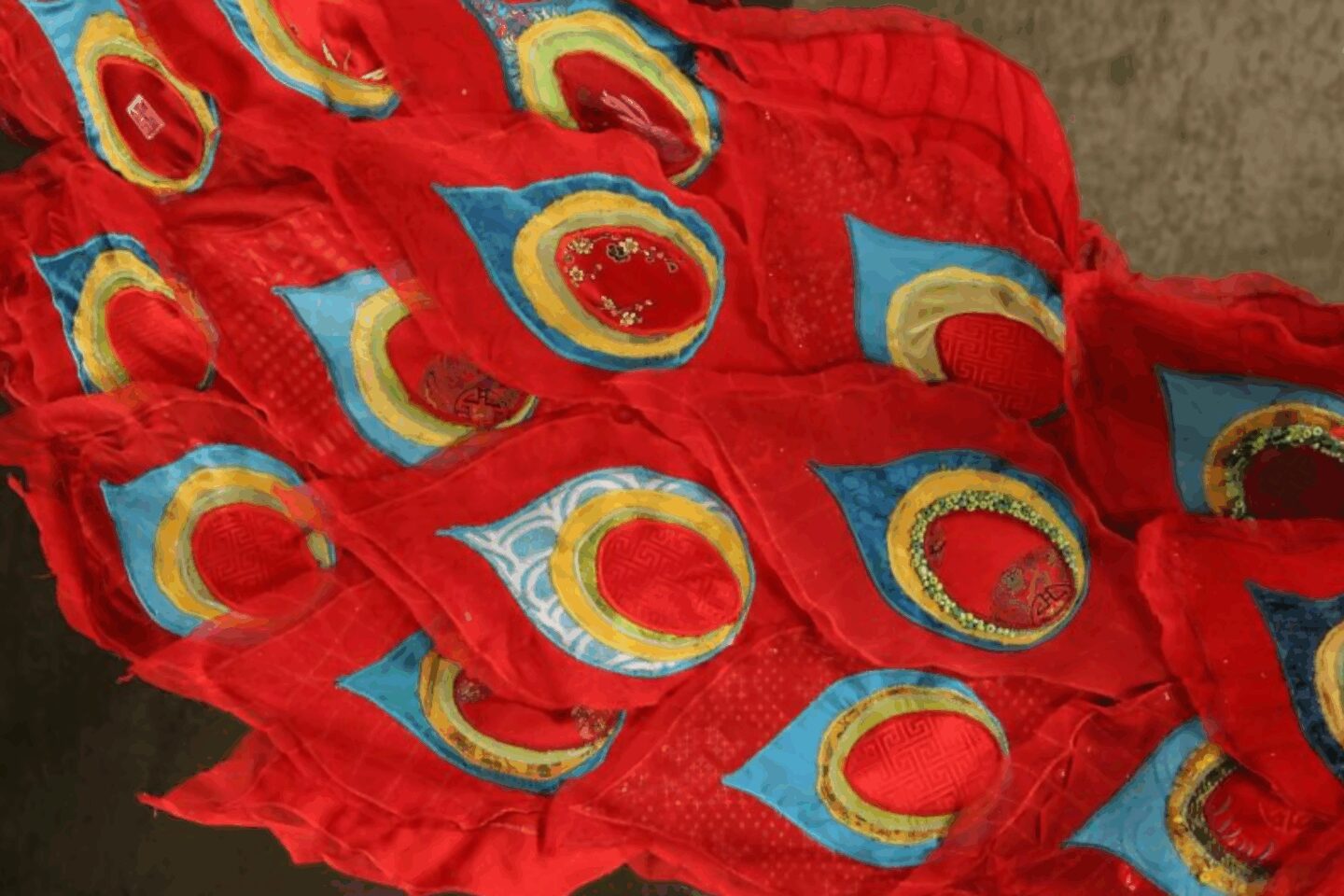
Greer placed her Phoenix Fairy on a red patterned branch made from fabric just above the Children’s Center reference desk. Reminiscent of a lush illustration, Greer created the phoenix’s feathers from individually sewn pieces of red fabric in different shades and patterns, glitter and sequins, and additional pieces of yellow and turquoise fabrics for the tail feathers. The phoenix is understood in different cultures as a bird, often born of the sun, that cyclically dies in flames and is reborn from its own ashes. Greer notes in her explanation of the work that ideas and imagery of the phoenix are found across mythology, astrology, astronomy, world religions, animal behavior, history, and children’s literature.
The phoenix is a universal symbol of resilience, renewal, and immortality. The Phoenix Fairy represents the continual rebirth of knowledge while also staying constant. When the phoenix is reborn, she is the same, but also different. This idea resonated in discussions with library staff. One children’s librarian remarked that an analogy could be made between the phoenix and the new Central Library. The library had had its own rebirth—it has re-envisioned concepts and a new form, but its purpose to store and provide access to wisdom and knowledge remains the same. In the case of the Central Library, it was the third time it had (re)emerged from a former site. Greer also extends the analogy to knowledge itself—it is often reinvented while staying the same; human inquiry continually striving to re-discover the past while innovation never stops.
The Magic Grove (2004-2005)
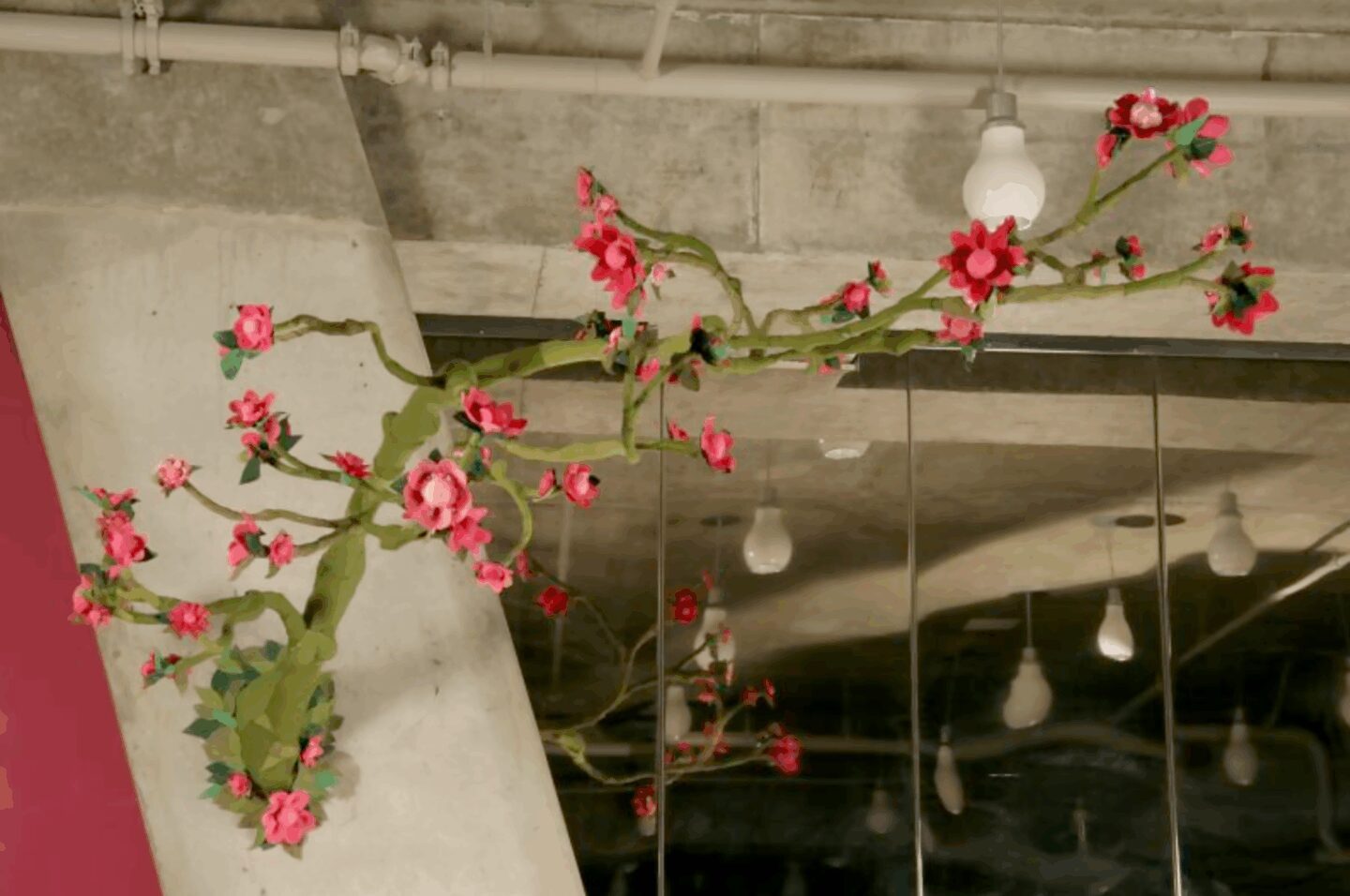
The Magic Grove consists of hand-sewn branches adorned with various shades of pink flowers that appear to grow from a column. Imagination and the grace of trees are central ideas in the work. The Magic Grove represents knowledge where a “seed of an idea can be planted within us and then flourish during our lives.”
In children’s literature and in a child’s imagination, anything is possible. For this work, Greer focused on the idea in children’s stories of the outside growing in. Where the Wild Things Are, the Caldecott Medal-winning picture book by Maurice Sendak (1928-2012), was a story that came up in conversations the artist had with children and parents during her artist’s residency. In the book, the story’s protagonist, a young boy named Max, experiences a tree-filled strange new land suddenly emerge in his bedroom. Greer was told about this moment in Where the Wild Things Are over and over during those conversations.
Trees became a central theme in Greer’s work. During research, Greer learned that there were many books in the Children’s Center where trees played a role or even acted as a main character. In discussing the work, she noted that trees symbolized growth, fertility, substance, family, home, and protection. The Magic Grove took its name from a book by Libuše Paleček that drew on Persian folktales. The story follows a farmer and his family who, after finding a bag of gold, uses it to buy and free some captive birds instead of buying trees. In gratitude, the birds drop seeds and create a magical grove that provides the family with protection forever. Greer thought about what would happen if every book featuring trees in the Children’s Center started to grow. The center itself could become a magic grove.
Leaving the Library, proceed up 4th Avenue to University Street, then go left on University to our next stop, Benaroya Hall, at 200 University Street. Enter at the Corner of 3rd and University.